
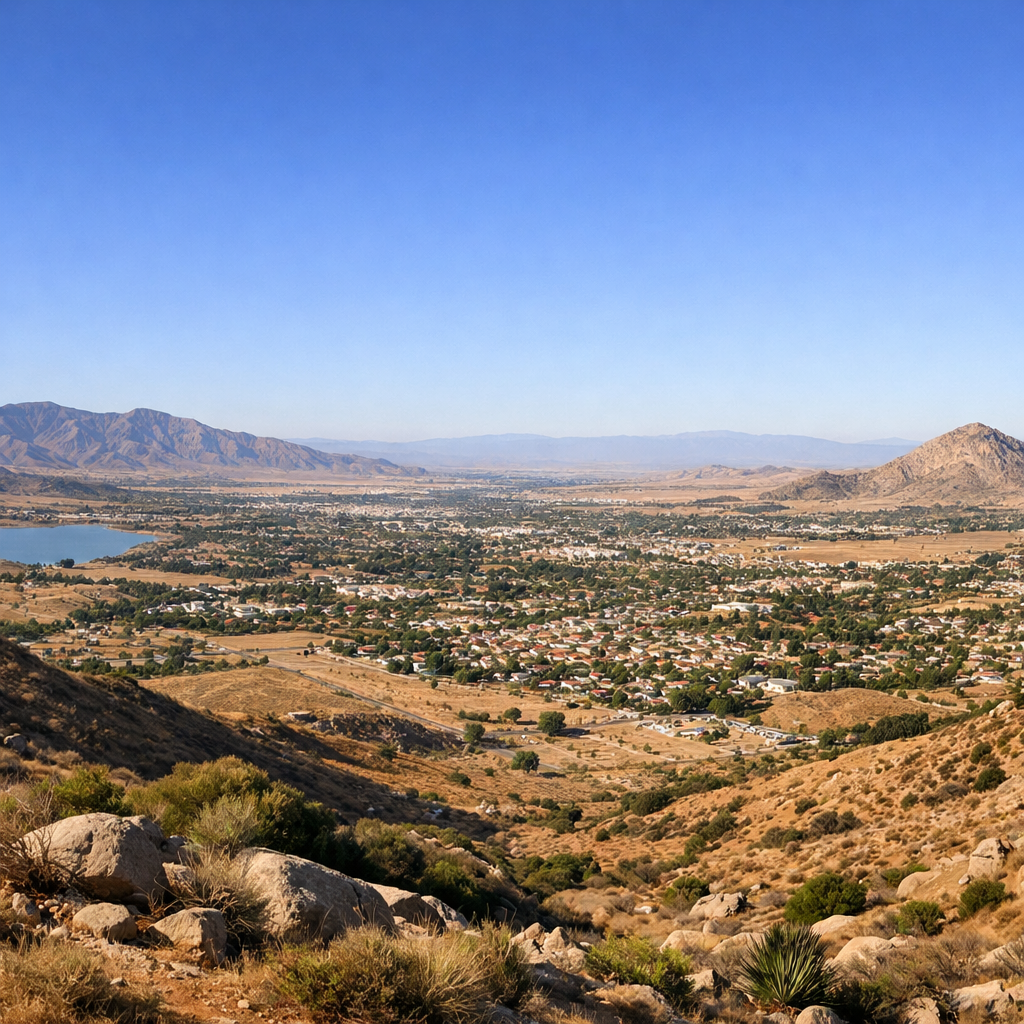
Moreno Valley, situated in Southern California, experiences a Mediterranean climate characterized by hot, dry summers and mild, wet winters. This climate pattern influences various aspects of daily life, from outdoor activities to agricultural practices.
Seasonal Temperature Variations
Throughout the year, temperatures in Moreno Valley exhibit significant variation:
- Summer (June to September): The hot season lasts for approximately 3.1 months, from June 19 to September 22, with an average daily high temperature above 88°F. The hottest month of the year is August, with an average high of 94°F and low of 64°F.
- Winter (November to March): The cool season lasts for about 3.9 months, from November 22 to March 19, with an average daily high temperature below 70°F.
Precipitation Patterns
Moreno Valley receives an average annual precipitation of approximately 12 inches, with most rainfall occurring during the winter months. December through March are typically the wettest months, while the summer months, particularly July and August, are the driest.
Environmental Considerations
The city’s semi-arid climate presents unique environmental challenges and opportunities. Water conservation is crucial due to limited rainfall, especially during prolonged dry periods. Residents are encouraged to adopt water-saving practices and landscaping techniques suitable for arid environments.
Additionally, the region’s climate supports a diverse range of native plant species. Incorporating these plants into local landscaping can reduce water usage and promote biodiversity.
Understanding Moreno Valley’s climate is essential for residents and visitors alike. By recognizing seasonal patterns and environmental factors, individuals can make informed decisions that contribute to the community’s sustainability and resilience.